Can You Buy a Home With an Assumable Mortgage in Roseville?
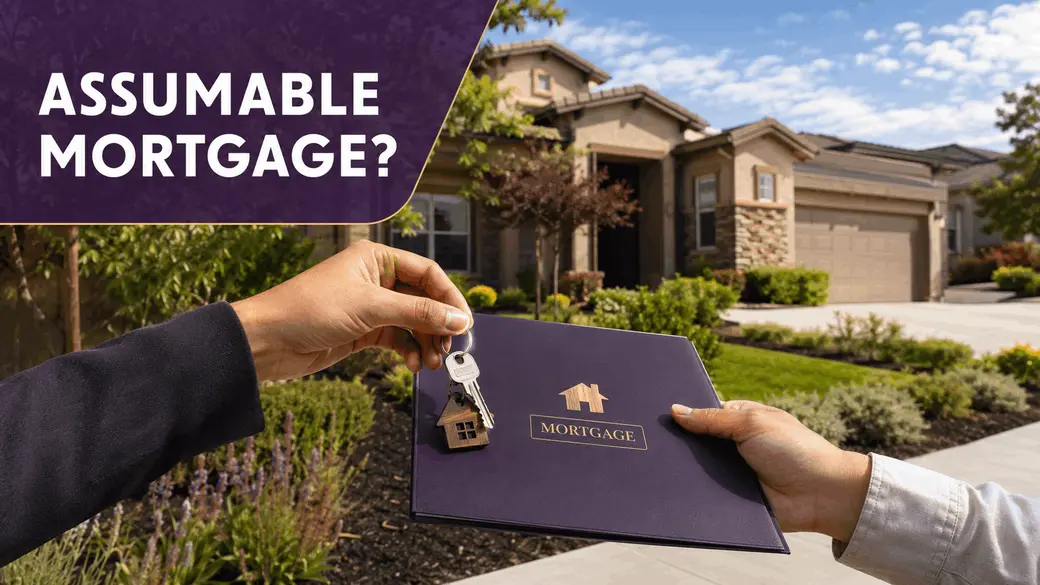
Can you take over a seller's mortgage when buying a home in Roseville, CA?
Yes — if the seller has an FHA, VA, or USDA loan, a qualified buyer can assume it and keep the seller's original interest rate, which right now often means a rate in the 2.25%–3.5% range instead of today's mid-6% market. Conventional loans are almost never assumable. The catch is the equity gap: you have to pay the seller the difference between their loan balance and the sale price, in cash or through a second loan. In Placer County's price range, that gap is usually six figures.
By Rich & Kat Farless | July 22, 2026
Here's the question we're getting more than almost any other right now: "The seller has a 3% loan — can I just take it over?"
It's a smart question. With rates hovering in the mid-6s through 2026, the difference between a new loan and an inherited 3% loan is enormous. And with more homes sitting on the market in Roseville — median days on market have crept up into the 20-to-40-day range depending on price point — buyers finally have room to ask about creative financing without losing the house to ten other offers.
So let's walk through exactly how an assumable mortgage works in California, what it costs, where the traps are, and whether it actually makes sense for your situation.
What "assumable" actually means
When you assume a mortgage, you legally take over the seller's existing loan — the same balance, the same interest rate, the same remaining term. You're stepping into their shoes instead of originating a brand-new loan at today's rates.
Only government-backed loans are assumable:
- FHA loans — assumable with lender (servicer) approval and buyer qualification
- VA loans — assumable by any qualified buyer, and you do not have to be a veteran to assume one
- USDA loans — assumable in rural-eligible areas with approval
Conventional loans — the kind most move-up buyers in Granite Bay and Folsom carry — contain a "due-on-sale" clause that lets the lender demand full payoff when the home changes hands. That's why conventional loans are effectively off the table for assumption.
The savings can be real. Take a $400,000 loan balance:
- At 3.0%, the principal and interest run about $1,686 a month.
- At 6.5% on a new loan, that same $400,000 costs about $2,528 a month.
That's roughly $842 a month — more than $10,000 a year — for the exact same balance. On a VA loan at 2.25%, the gap is even wider. This is why buyers are chasing these loans.
The catch nobody mentions first: the equity gap
Here's where most buyers get tripped up. When you assume a loan, you take over the balance — not the price.
Say a Roseville home is selling for $635,000, right around the current median. The seller bought in 2021 and still owes $400,000 on their FHA loan. You'd assume that $400,000 at their low rate — but you still owe the seller their $235,000 of equity.
That $235,000 is the equity gap, and you have to bring it to closing. You have a few ways to cover it:
- Cash — the cleanest path if you have it liquid.
- A second mortgage — some lenders write a second specifically for assumption deals. Rates run higher (often 8%–10%), but you're only paying that rate on the gap, not the whole loan. Blending a 3% first with a 9% second on a smaller balance often produces an effective rate in the 4%–5% range — still well under market.
- A HELOC from another property you own.
- Gift funds — family can gift toward the gap under the same rules as a standard down-payment gift.
- A combination of the above.
The bigger the seller's equity, the bigger the cash or second-loan hurdle. That's the real reason assumptions don't happen more often — not the rate, the gap. It's exactly the kind of math we run with clients before they ever write an offer, because the monthly savings only matter if you can actually fund the front end. If you want to see how these numbers stack against a standard purchase, our breakdown of what your monthly payment really looks like on a new-construction versus resale home in Roseville is a useful side-by-side.
You still have to qualify
An assumption is not a way around underwriting. The loan's terms don't change, but the servicer absolutely re-evaluates you.
Expect a near-identical process to a fresh purchase application: a credit pull, income verification, and asset documentation. General guidelines put the FHA minimum credit score around 580 and the VA minimum around 620, though individual servicers can require more.
This is one more reason to get your financing lined up early. Assumption or not, walking in already vetted changes how sellers see you — which is the whole point of getting pre-approved before you start shopping.
Costs and timeline
Assumptions are cheaper than originating a new loan, but not free:
- VA assumption fee: roughly 0.5% of the loan balance, plus a processing fee (often around $300).
- FHA assumption fee: typically $500–$900.
- No new origination or funding fees on the assumed portion, and no fresh appraisal-driven rate shock.
On timing, VA servicers are required to process a complete assumption application within 45 days. In practice, a clean file closes in about 45 to 75 days — a bit longer than a standard escrow, so build that into your offer and your rate-lock strategy on any second financing.
If you're the seller: your low rate is an asset — and a risk
Sellers in Roseville, Lincoln, and West Roseville who locked in a 2.75% or 3.25% loan during the boom are sitting on something buyers genuinely want. Marketing an assumable loan can widen your buyer pool and help your home stand out in a market where buyers have more choices than they did two years ago.
But VA sellers need to understand one serious risk before agreeing: entitlement.
When a non-veteran assumes your VA loan, your VA entitlement stays tied to that property until the loan is fully paid off. That can limit your ability to use your zero-down VA benefit on your next home. The only way to free it up sooner is a substitution of entitlement, which happens only when another eligible veteran assumes the loan and swaps in their own.
Just as important: get a release of liability in writing. Without it, if the buyer later stops paying and the loan defaults, the VA can come after you — the original veteran — for the debt. This is not a detail to leave to chance, and it's a big reason a VA seller shouldn't hand over a loan without a title and escrow company and an agent watching the paperwork.
Does an assumable mortgage make sense for you?
It's a strong play if all three of these line up:
- You have the cash or the borrowing capacity to cover the equity gap
- The rate spread is big enough to matter (a 3% assumed loan versus 6.5% is a clear yes; a 5.5% loan, less so)
- You can qualify with the servicer and tolerate a slightly longer closing
It's a weaker fit if the seller has a lot of equity and you'd have to finance most of the gap at 9%, or if the assumable balance is so low that the blended payment lands right back at market anyway.
One more Roseville-specific note: assuming a loan doesn't erase the other monthly costs unique to our market. If the home sits in a West Roseville new-construction community — Fiddyment Farm, Amoruso Ranch, Winding Creek — Mello-Roos and any HOA transfer with the property regardless of how you finance it. Your low assumed rate is only one line of the payment. We always map the full monthly number, not just principal and interest, and that same discipline applies to what buyers actually pay in closing costs in Roseville.
Frequently Asked Questions
Do I have to be a veteran to assume a VA loan in California?
No. Any qualified buyer can assume a VA loan as long as the servicer approves your creditworthiness — you don't have to have served. Just know that if you're not a veteran, the seller's VA entitlement stays tied to the loan until it's paid off, which matters more to the seller than to you.
How do I find homes with assumable mortgages in Roseville and Placer County?
Most listings don't advertise it, so the loan type often has to be asked about directly — and many buyers and agents simply never ask. There are online platforms that identify assumable loans, and Placer County listing searches increasingly flag them. The most reliable path is having an agent who knows to ask the listing side about the existing loan before you write an offer.
Can I finance the equity gap instead of paying cash?
Often, yes. Options include a second mortgage designed for assumptions, a HELOC on another property, gift funds, or seller financing. Second-loan rates are higher, but because you're only paying that rate on the gap — not the whole loan — the blended rate usually still beats a new market-rate mortgage.
How long does a loan assumption take to close?
VA servicers must process a complete application within 45 days, and a clean file often closes in 45 to 75 days total. That's a bit slower than a typical Placer County escrow, so plan your timeline and any second-loan rate lock accordingly.
Is an assumable mortgage worth it in 2026?
When today's rates sit in the mid-6s and you can inherit a rate under 3.5%, the monthly savings can top $800 to $1,200 on a typical Roseville balance — so yes, it's often worth pursuing if you can cover the equity gap and qualify. The deciding factor is almost always whether you can fund the gap, not the rate itself.
The bottom line
An assumable FHA or VA loan can hand you a sub-3% rate in a mid-6% market — a genuine advantage that can save you five figures a year. The trade-off is the equity gap you have to cover up front and a slightly longer, servicer-driven closing. Whether it pencils out comes down to your cash position, the size of that gap, and the specific loan on the specific home.
That's not a calculation to guess at. If you're ready to talk through your situation — whether you're a buyer hunting for an assumable loan or a seller wondering if your low rate is a selling advantage — Rich & Kat are here to help. Schedule a free consultation at richandkatsoldthat.com/talktous.
About Rich & Kat Farless Rich and Kat Farless are a husband-and-wife real estate team with over 30 years of combined experience serving buyers and sellers across the Sacramento region. As the #1 husband-and-wife team in Roseville, CA, they specialize in single family, new construction, and luxury properties across Placer, Sacramento, and El Dorado counties. Connect with them at richandkatsoldthat.com.
Categories
- All Blogs (75)
- Buyer Guides (2)
- Buyers (1)
- Buying a Home (6)
- First-Time Buyers (2)
- Sellers (2)
- Buyer Resources (1)
- buyers (4)
- Buying (4)
- Buying a Home (14)
- Buying a Home, New Construction, Placer County, Roseville (1)
- California Process (1)
- California Real Estate (2)
- California Real Estate Process (10)
- Cost of Buying (2)
- Cost to Buy (2)
- Costs & Finances (6)
- El Dorado County (1)
- El Dorado Hills (1)
- Financing & Mortgages (3)
- First-Time Buyers (1)
- Folsom (2)
- Granite Bay (1)
- HOA (1)
- Home Buying (1)
- Home Financing (1)
- Home Prep & Pricing (1)
- Home Selling (3)
- Home Selling Tips (2)
- Lincoln CA (1)
- Loomis (2)
- New Construction (5)
- placer county (1)
- Real Estate Process (1)
- repairs (1)
- Roseville Real Estate (4)
- Seller Costs (2)
- Seller Resources (1)
- sellers (3)
- Selling (4)
- selling a home (11)
Recent Posts








Agent License ID: 01193836, 01186753
+1(916) 284-1520 | kat@homesbyrichandkat.com