Buying New Construction in El Dorado Hills, CA (2026 Guide)
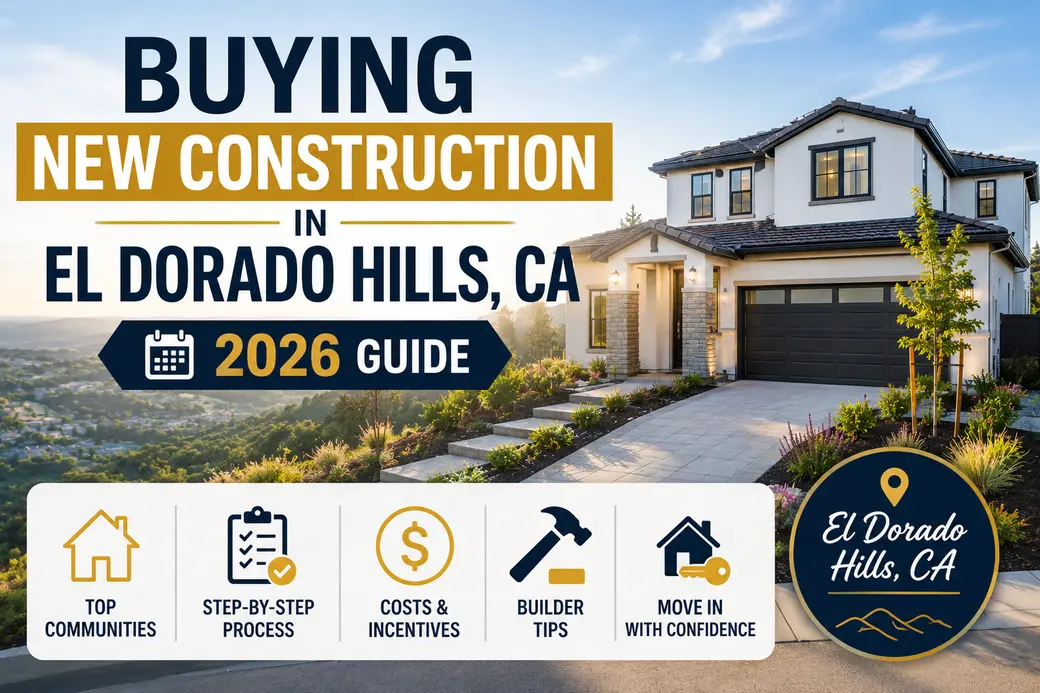
What do you need to know before buying a new construction home in El Dorado Hills?
Buying new construction in El Dorado Hills in 2026 comes down to five things most buyers underestimate: the builder's incentives are worth more than a price cut, you should bring your own agent from the very first visit, the real monthly cost includes Mello-Roos and foothill wildfire insurance on top of the mortgage, design-center upgrades carry huge markups, and a 6-to-9-month build makes your rate lock the trickiest part of the whole deal. New-home list prices sit near $975,000 in a balanced market, and the buyers who win are the ones who plan for all of it before they sign.
By Rich & Kat Farless | August 9, 2026
New construction is having a moment in El Dorado Hills. Toll Brothers just opened Summit Estates, Serrano and Blackstone are still adding homes, and Village A14 brought 51 new houses online near the Serrano gates. If you've been touring model homes off Bass Lake Road or Silva Valley, you already know the pull — everything's new, nothing's broken, and the builder makes it feel easy.
Here's what we tell every client who's about to buy from a builder: new construction is a different game than buying a resale home, and the rules favor the side that knows them. Let's walk through what actually matters.
The market right now — and why it works in your favor
As of mid-2026, El Dorado Hills is a balanced market. New homes are listing around $975,000 to $980,000, homes are sitting about 58 days before they sell, and buyers are averaging fewer than two offers per home. That's a real shift from the frenzy of a few years ago, and it hands you something you didn't have then: negotiating room.
The luxury and gated tiers run higher. Serrano's new construction has been trading around $1.17 million, The Promontory closer to $1.34 million, and Toll Brothers' new Summit Estates — 41 homes on one-acre-plus sites — starts around $2 million. Blackstone, which will top out near 1,500 homes at full build-out, spreads across a wider range because several different builders work inside it.
The takeaway: in a balanced market, builders would rather protect their base prices and move you with incentives. That's exactly where the value is.
Incentives beat a price cut — learn to read them
When a builder won't drop the sticker price, they'll almost always move on financing and credits instead. In 2026 that's meant:
Rate buydowns — often 1% to 2% below the going market rate, sometimes through the builder's in-house lender. On a $900,000 loan, dropping from 6.5% to 5% saves you real money every month.
Closing-cost credits — frequently $5,000 to $10,000 when you use the preferred lender.
Design-center credits and free upgrades — the builder eats the cost of finishes to keep the base price on paper.
Standing-inventory discounts — the best leverage of all. A quick-move-in home the builder wants off the books before quarter-end is where you'll find the deepest deals.
If you can time your purchase toward the end of a builder's quarter and target a home that's already built, you're negotiating from the strongest position available.
Bring your own agent — starting with the first visit
This is the mistake we see most often. Buyers walk into a model home, get excited, and register with the on-site sales rep without their own agent. That rep works for the builder, not for you.
Builders expect and budget for buyer's agents — but most communities require your agent to register with you on your first visit, or the builder won't recognize the representation. Once you've signed in alone, it can be too late to bring someone in.
Your agent's job on a new build is different from a resale, and it matters: comparing the builder's contract against standard terms, pushing on incentives, protecting your inspection and appraisal rights, and keeping the timeline honest. We do this constantly, and there's no separate cost to you for having representation. (If you want the deeper version of why this matters, our guide on whether you need a buyer's agent for new construction breaks it down.)
The preferred-lender question
Builders steer you toward their in-house or preferred lender because that's where the incentive lives. Sometimes that lender genuinely is your best deal — the credits can be worth thousands.
But don't accept it on faith. Get a full loan estimate from the builder's lender and a competing quote from an outside lender, then compare the rate, the lender fees, the points, the monthly payment, and the cash to close. In our experience, the builder's lender will frequently match or beat an outside quote to keep both the incentive and your loan in-house. You only get that outcome if you have the competing quote in hand.
The real monthly cost: Mello-Roos, HOA, and insurance
The mortgage is only part of your payment in El Dorado Hills. Two line items catch new-construction buyers off guard.
Mello-Roos. Most newer gated communities here carry a Community Facilities District special tax that funds roads, parks, and schools. In Serrano, for example, there are two bonds — an ongoing school-facilities bond running roughly $0.32 to $0.52 per square foot, and a capital-facilities bond (scheduled to conclude around 2031) that runs from about $777 to $1,800 per home. Blackstone homes carry HOA dues near $138 a month plus their own CFD assessments. Across El Dorado Hills, Mello-Roos commonly adds $200 to $500 or more to your monthly cost. Always verify the exact amount for the specific parcel — it varies lot by lot. Our Mello-Roos explainer shows how to fold it into your true monthly number.
HOA dues. Serrano runs roughly $190 to $250 a month depending on whether you're in a custom or production home; those dues cover the gates, security, common areas, and front-yard landscaping. Blackstone sits lower, near $138.
Wildfire insurance. El Dorado Hills sits in the foothills, and much of El Dorado County is mapped in high or very-high fire hazard severity zones. Insurance here is meaningfully more expensive — the same home can cost roughly $3,200 more per year to insure in El Dorado County than in Sacramento County, and FAIR Plan policies on higher-risk properties commonly run $3,200 to $4,800 or more. There's a silver lining for new construction: homes built to current fire code often qualify for hardening discounts (up to about 16% off the wildfire portion of premium), which can soften the hit. Get an insurance quote before you're locked into a contract, not after.
Design-center upgrades — where the margins hide
The design center is the fun part and the expensive part. A good rule of thumb is to budget around 10% of your base price for upgrades — on an $900,000 home, that's roughly $90,000 if you're not careful.
Two things to know. First, builder markups on design-center upgrades are steep — often 40% to 65% gross margin, well above what they make on the base house. Second, structural choices (an extra bedroom, a bigger slider, additional wiring) have to be made during the build; you can't add them later, and the change-order window is short. Most builders allow changes free within three to five business days, after which a change order can run $500 to $2,500-plus and may push your closing date.
Our coaching: spend on the structural and hard-to-change items, and hold back on the cosmetic upgrades you can do yourself after closing for a fraction of the price.
Your rate, your timeline, and your walkthrough
Two more pieces trip up new-construction buyers, and both are about protecting yourself.
Rate locks on a long build. New construction runs 6 to 9 months from contract to closing, but a standard rate lock only lasts 45 to 60 days. Extended locks of 120 to 360 days exist, but they cost 0.5 to 1.5 points up front, and if the build slips — most see 2 to 4 weeks of delay beyond the estimate — extension fees run roughly 0.125% to 0.25% per week. Ask the builder's lender exactly how they'll handle the lock for your timeline, and get the delay language in writing.
Inspect it anyway. New doesn't mean flawless. The pre-closing walkthrough is genuinely the most important inspection you'll do on this home — it's your last chance to get defects fixed at the builder's expense before you accept the house. Hire an independent inspector on top of the builder's walkthrough; they'll catch installation and code issues a quick visual misses. Don't sign until every punch-list item is documented as resolved or formally deferred, and understand your one-year builder warranty before you close.
Frequently Asked Questions
Do I need my own agent to buy a new construction home in El Dorado Hills?
Yes — and you should register that agent on your first visit to the community. Builders budget for buyer's agents and there's no added cost to you, but if you sign in alone the builder may not recognize representation later. Your agent negotiates incentives, reviews the builder's contract, and protects your inspection and appraisal rights.
How much is Mello-Roos on a new home in El Dorado Hills?
It varies by community and by parcel, but it commonly adds $200 to $500 or more per month. Serrano carries two bonds (an ongoing school bond and a capital-facilities bond scheduled to end around 2031), and Blackstone homes pay a CFD assessment on top of roughly $138 in monthly HOA dues. Always verify the exact figure for the specific lot before you commit.
Should I use the builder's preferred lender?
Sometimes — the incentives can be worth thousands in closing-cost credits or a rate buydown. But get a competing quote from an outside lender first and compare the full loan estimate. The builder's lender will often match or beat an outside offer to keep your loan in-house, and you only capture that if you have the comparison in hand.
Is it worth getting an independent inspection on a brand-new home?
Yes. A new home can still have installation errors, code issues, and cosmetic defects hidden beneath finishes. The pre-closing walkthrough and punch list are your last chance to get problems fixed at the builder's expense, and an independent inspector will find issues a standard walkthrough misses. Don't sign until every item is documented.
Why is homeowners insurance so expensive in El Dorado Hills?
Much of El Dorado County sits in a high or very-high fire hazard severity zone, which raises premiums — often thousands of dollars more per year than a comparable home in Sacramento County. New construction has an edge here because homes built to current fire code can qualify for wildfire-hardening discounts. Get a quote before you're under contract so there are no surprises.
Your next step
New construction in El Dorado Hills can be a great buy in 2026 — the market's balanced, builders are competing with real incentives, and the newest homes come with modern fire-code and warranty advantages. The buyers who come out ahead are simply the ones who plan for the incentives, the Mello-Roos, the insurance, and the timeline before they walk into the model home.
That's exactly the kind of thing we walk our clients through — often before their first visit to a community. If you're weighing a new build in Serrano, Blackstone, The Promontory, or any of the newer El Dorado Hills communities, and you want someone in your corner from the first handshake with the sales rep, Rich & Kat are here to help. Schedule a free consultation at richandkatsoldthat.com/talktous.
About Rich & Kat Farless Rich and Kat Farless are a husband-and-wife real estate team with over 30 years of combined experience serving buyers and sellers across the Sacramento region. As the #1 husband-and-wife team in Roseville, CA, they specialize in single family, new construction, and luxury properties across Placer, Sacramento, and El Dorado counties. Connect with them at richandkatsoldthat.com.
Categories
- All Blogs (81)
- Buyer Guides (3)
- Buyers (2)
- Buying a Home (7)
- First-Time Buyers (2)
- Sellers (3)
- Buyer Resources (1)
- buyers (4)
- Buying (4)
- Buying a Home (14)
- Buying a Home, New Construction, Placer County, Roseville (1)
- California Process (1)
- California Real Estate (2)
- California Real Estate Process (11)
- Cost of Buying (2)
- Cost of Homeownership (1)
- Cost to Buy (2)
- Costs & Finances (6)
- El Dorado County (1)
- El Dorado Hills (1)
- Financing & Mortgages (3)
- First-Time Buyers (1)
- Folsom (2)
- Granite Bay (1)
- HOA (1)
- Home Buying (1)
- Home Financing (1)
- Home Prep & Pricing (1)
- Home Selling (3)
- Home Selling Tips (2)
- Lincoln CA (1)
- Loomis (2)
- New Construction (5)
- placer county (1)
- Real Estate Process (1)
- repairs (1)
- Roseville Real Estate (4)
- Seller Costs (2)
- Seller Guides (1)
- Seller Resources (1)
- sellers (3)
- Selling (4)
- selling a home (11)
Recent Posts










Agent License ID: 01193836, 01186753
+1(916) 284-1520 | kat@homesbyrichandkat.com